
Imagine walking into a voting booth. You draw the curtain. For a moment, you are alone with your conscience. You make your choice, fold the paper, and drop it in a box. You walk out, and no one—not your boss, not your neighbors, not the government—knows which box you checked.
This is the gold standard of democracy: The Secret Ballot.
But as our lives move online, we face a difficult paradox. To vote online, you have to prove who you are (so you don’t vote twice). But if you prove who you are, how do we keep your vote secret?
Usually, we are forced to trust a middleman. We trust that the software company or the government official won’t peek at our vote. But history teaches us that “trust me” is a dangerous policy.
At the Deocracy Institute, we believe there is a better way. It involves a concept called pseudonymous voting, powered by a special kind of mathematics called cryptography.
The Digital Disguise
Let’s skip the computer science lecture and use an analogy.
Imagine a masquerade ball where everyone must show their ID at the front door to get in. The bouncer checks your ID and marks your name off the list to ensure you only enter once.
Here is the trick: Once the bouncer verifies you, they hand you a mask that covers your face completely. You put it on before you walk into the ballroom.
Inside the ballroom, everyone can see you are a valid guest (because you have a mask), but no one knows which guest you are. You can raise your hand to vote on the music, or the food, and your vote is counted. Everyone sees the hand go up. But no one knows it was you.
This is pseudonymous voting. It is a way of using technology to prove you have the right to vote, without revealing your identity when you cast it.
We don’t need to trust politicians to keep our secrets. We can trust mathematics.
Why This Saves Democracy
Why does the Deocracy Institute care so much about this? Because in many parts of the world—and even in sectors of our own society—voting is risky.
- It prevents coercion: If your boss, spouse, or community leader can demand to see how you voted on your phone, you aren’t free. Pseudonymous voting makes it mathematically impossible for them to verify your vote, meaning they can’t force you to vote their way.
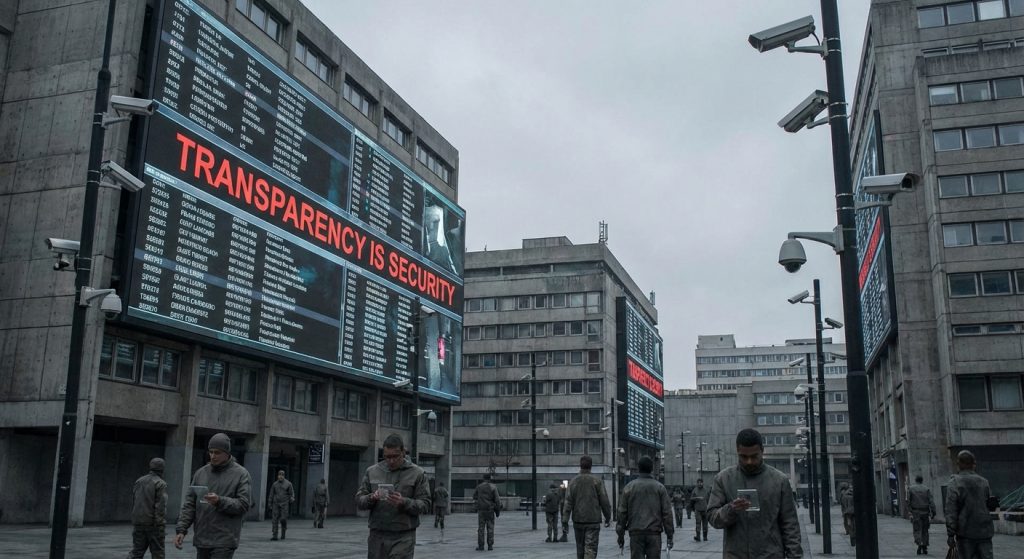
- It creates total transparency: Because the “masks” are digital, we can put all the votes on a public scoreboard that everyone can see. You can verify that your vote was counted correctly without revealing it was yours.
Moving Beyond “Trust Me”
For too long, our institutions have operated on blind faith. We are told the system works, and we nod our heads. But true democratization means opening the hood and letting everyone see the engine.
By using these new technologies, we aren’t just making voting faster; we are making it safer. We are bringing the security of the physical voting booth into the digital age.
We are marveling at the possibility of a world where your voice is heard, your identity is protected, and the results are undeniable.
Leave a Reply